
Criminal Cases in Whitfield County Courts
Whitfield Superior Court, part of the Conasauga Judicial Circuit with Murray County, has exclusive felony trial jurisdiction. Whitfield State Court handles misdemeanors and traffic matters within its jurisdiction. Magistrate Court deals with warrants, first appearances, and preliminary matters, while Probate Court receives many county traffic cases. Dalton, Varnell, and Tunnel Hill municipal courts keep their own ordinance, citation, and qualifying misdemeanor files.
The Clerk of Superior Court maintains felony pleadings, docket entries, judgments, sentences, fines, fees, and restitution records at 205 North Selvidge Street in Dalton. A city citation may never become a Superior Court file, so the issuing agency and court named on the citation matter. Court staff can locate and copy records, but they cannot give legal advice or prepare a filing.
The same event can therefore leave records at several venues. A first-appearance entry in Magistrate Court is not the final felony file. A booking charge is not the accusation or indictment. Likewise, a municipal citation may remain with the city court. Follow the case number and named venue rather than assuming every criminal matter appears in one county index.
Whitfield Court Portal Coverage Has Limits
The free Whitfield Court Case Management Web Search carries broad public-record branding, but inspection of its Court Code control showed only Magistrate Court. It offers searches by party, associated party, and case number without requiring a public-search login. That makes it useful for the matters it indexes, not a complete Whitfield County criminal court case database.
If a felony file is absent, contact the Superior Court Criminal Division at 706-275-7490 or use the Georgia Courts E-Access directory and its PeachCourt provider. Older, certified, and archived files may also require the clerk. E-filing access and public record searching are separate services.
The portal does not publish a coverage start date, refresh schedule, result cap, or online-document price. Do not treat a blank result as a legal conclusion. Ask the clerk whether the name, court, filing year, or case type should be searched another way, and request the source file when certification matters.
The official party-search screen shows the actual local filters:
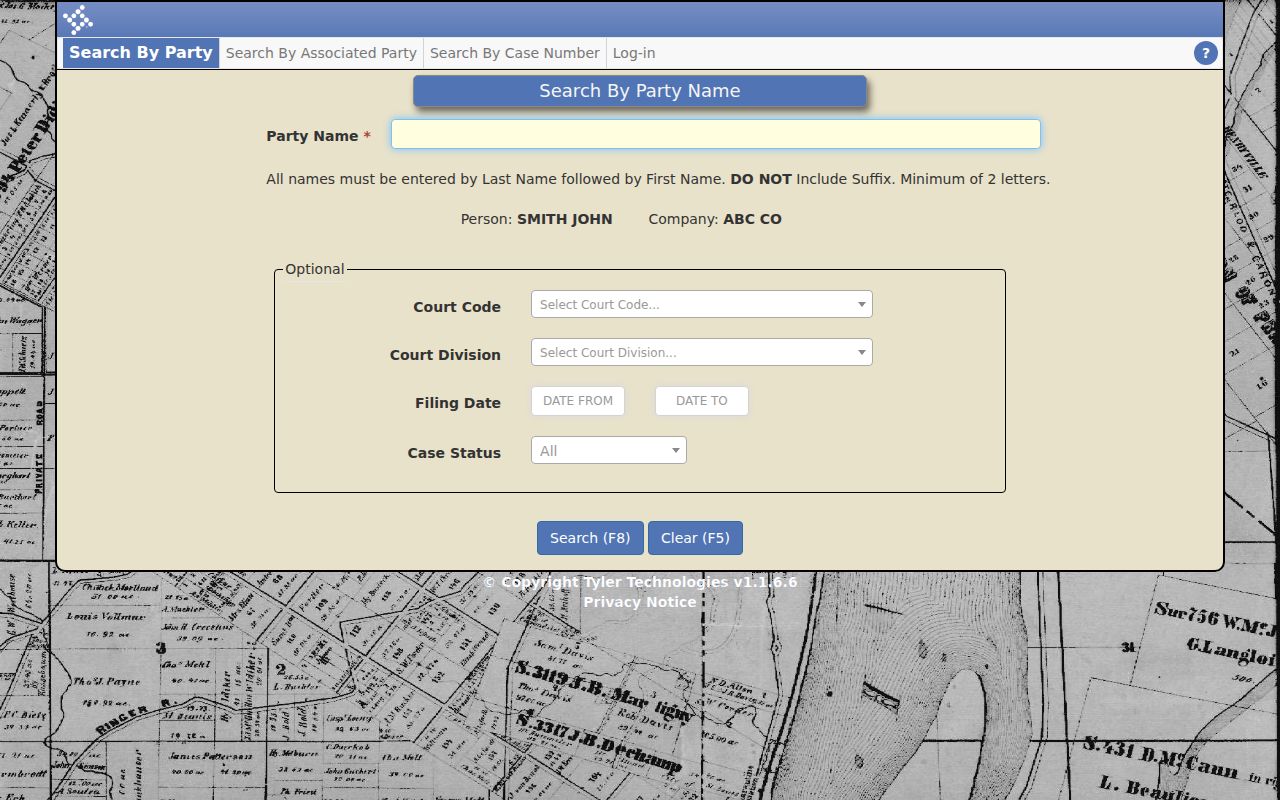
Those fields help narrow a Magistrate Court result, while the clerk remains the fallback for other Whitfield County court records.
How to Search Whitfield County Case Records
Start with the court that should own the file. Exact spelling and a filing range reduce false matches. The portal advises trying spelling variants and directs search questions to the Clerk of Courts at 706-278-5052.
- Open the county portal, accept its disclaimer, and confirm that Magistrate Court fits the matter.
- Search by party name with surname first, no suffix, and at least two letters.
- Limit the result with court division, filing dates, or case status where those controls apply.
- Read the docket in date order and distinguish a filed charge from the final disposition.
- For Superior, State, municipal, certified, or missing files, contact the proper clerk and request a cost estimate.
| Field Label | Type | Required | Notes |
|---|---|---|---|
| Party Name | Text | Yes | Last name then first name; omit suffix; minimum two letters |
| Court Code | Dropdown | No | Limits the court; inspected public choice was Magistrate Court |
| Court Division | Dropdown | No | Populates from the selected court |
| Filing Date From / To | Date | No | Sets the filing-date interval |
| Case Status | Dropdown | No | Default is All; case-number search also offers Active and Inactive |
Which Whitfield County Court Holds the File?
A record search can fail simply because it began at the wrong counter. Magistrate Court handles warrants, first appearances, and preliminary work, but a felony proceeds to Superior Court after prosecutor or grand-jury action. Probate Court handles much county traffic work. Dalton Municipal Court maintains qualifying city ordinance, code, misdemeanor, and traffic matters at 535 North Elm Street.
| Venue | Typical criminal role | Contact |
|---|---|---|
| Superior Court | Felony trial file | Criminal Division 706-275-7490 |
| Magistrate Court | Warrants, first appearance, preliminary matters | 706-278-5058 |
| Probate Court | Many county traffic cases | 706-275-7400 |
| Dalton Municipal Court | City ordinances and qualifying traffic or misdemeanor matters | 706-278-1913 ext. 101 |
What a Whitfield County Case File Shows
The case file records what prosecutors pursued and what the court did. It is distinct from the sheriff's booking file and from the GCIC history assembled from fingerprint-supported arrest cycles and reported outcomes. Read charge-level outcomes, since different counts in one case can end differently.
| Case Number & Court | Identifies the venue and local file used for clerk requests. |
|---|---|
| Charging Document | An accusation, indictment, or complaint states the charges actually pursued. |
| Docket Entries | A dated register of filings, notices, hearings, motions, and orders. |
| Hearing Dates | Past and scheduled events, subject to later calendar changes. |
| Disposition & Judgment | The result for each charge, such as conviction, dismissal, acquittal, or nolle prosequi. |
| Sentence & Conditions | Confinement, probation, restitution, fines, and other court-ordered terms. |
Reading Whitfield County Docket Status Terms
Active, inactive, and disposed are file-status cues, not interchangeable findings of guilt. An active file may await a hearing. An inactive label can reflect administrative status. A disposed case has reached an outcome, but the outcome still must be read at the charge level.
- Accusation
- A prosecutor-filed charging instrument used in eligible Georgia cases.
- Indictment
- A felony charging instrument approved as a true bill by a grand jury.
- Nolle prosequi
- The prosecutor formally declines to pursue a charge at that time.
- First Offender
- A Georgia disposition with distinct effects when statutory conditions are completed.
- Docket
- The chronological register of activity in the court file.
Stages of a Whitfield County Criminal Case
A summons or arrest begins the local trail. Magistrate Court may conduct first appearance and bond work. The prosecutor then selects an accusation or seeks an indictment, followed by arraignment, motion and discovery practice, and a plea or trial. The judge enters the outcome and sentence, with appeal available where pursued.
Whitfield's jail guidance says a person booked on a new charge generally receives a first appearance within 48 hours, with exceptions for probation violations, bench warrants, bondsman-off-bond matters, and tickets. That hearing addresses initial rights, counsel, and bond. It should not be mistaken for the later trial-court disposition.
Case flow: Charges Filed › Arraignment › Pretrial › Plea or Trial › Disposition › Sentencing
Federal Cases from Whitfield County
Federal prosecutions belong to the U.S. District Court for the Northern District of Georgia, not the Whitfield clerk's county portal. The district court identifies the correct federal venue and services:
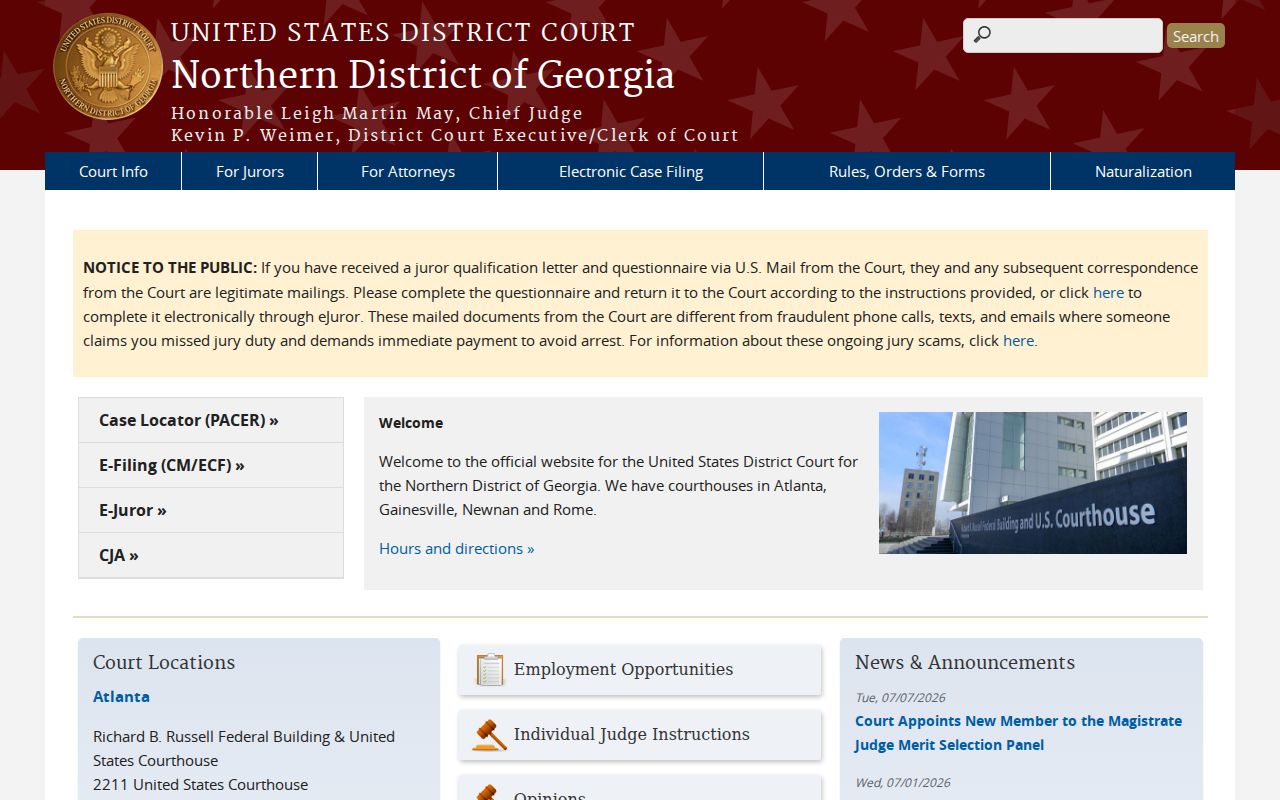
The district site provides court-specific information, while docket access normally runs through PACER.
The judiciary's PACER information page explains registration and current federal usage fees:
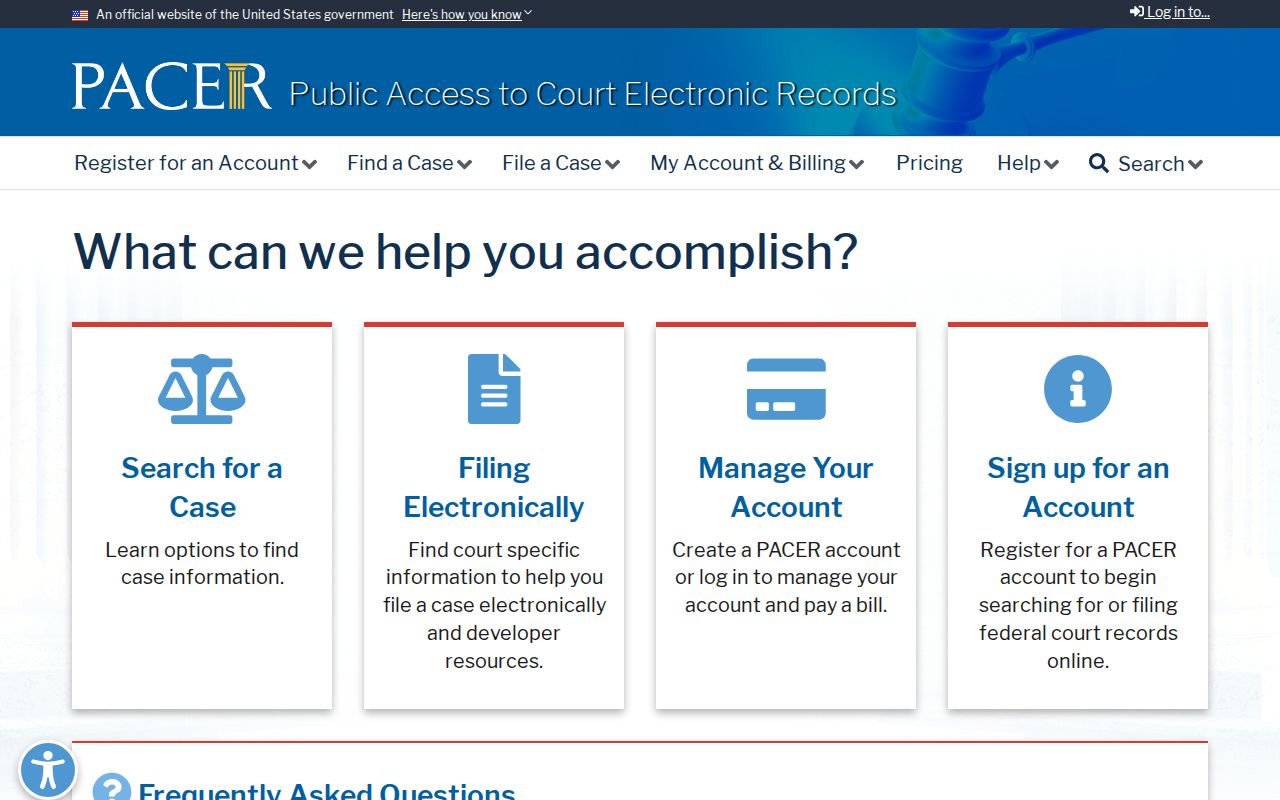
PACER is authoritative for federal dockets, but it does not replace the Whitfield County criminal court case channels.
Finding a Whitfield Federal Docket
The PACER Case Locator helps identify the federal court and case number before opening documents. Its official locator screen separates that nationwide index step from the district docket:
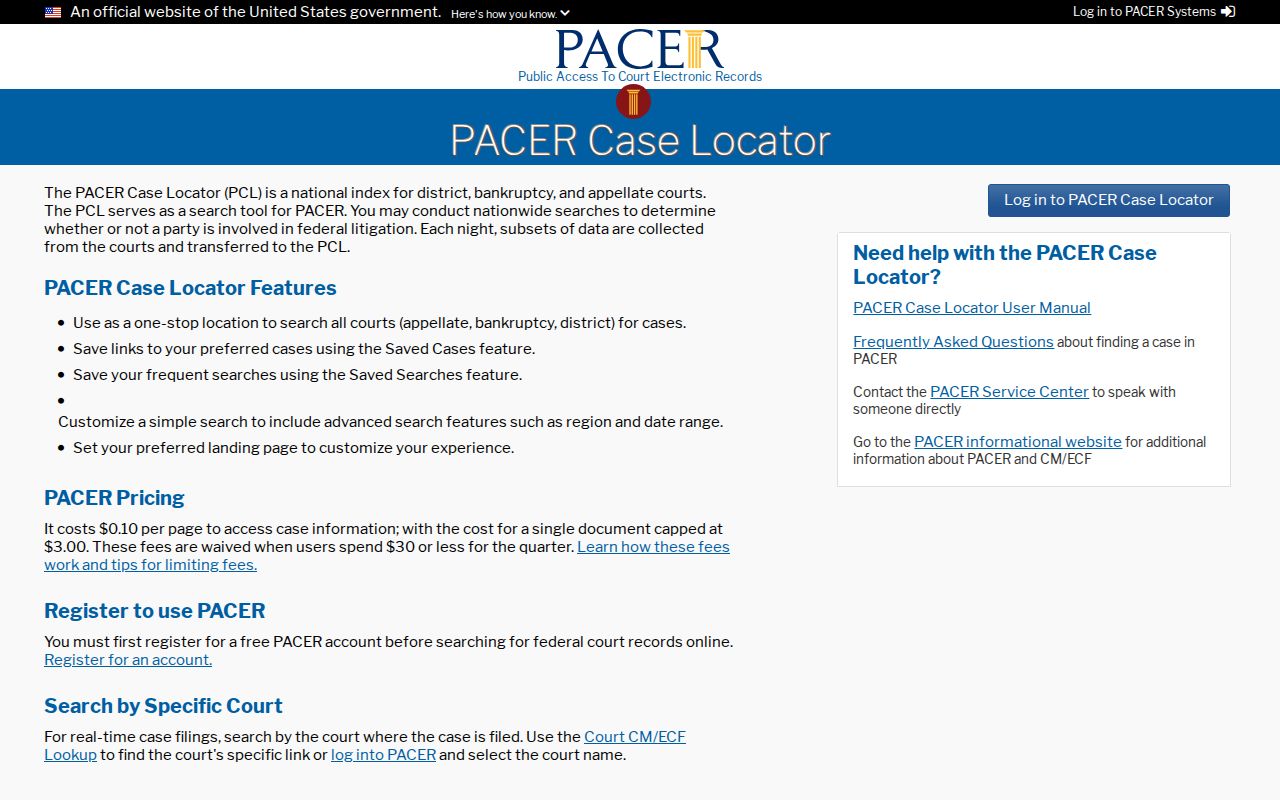
Registration may be required and charges follow the federal schedule, with the judiciary's quarterly low-usage waiver applying under its current terms.
Whitfield Courtroom Access Is Not File Access
A public docket does not grant permission to record a hearing. Georgia Uniform Superior Court Rule 21 addresses electronic and recording activity, while local judicial control still governs in the courtroom. The Georgia courts publish the official rules collection:
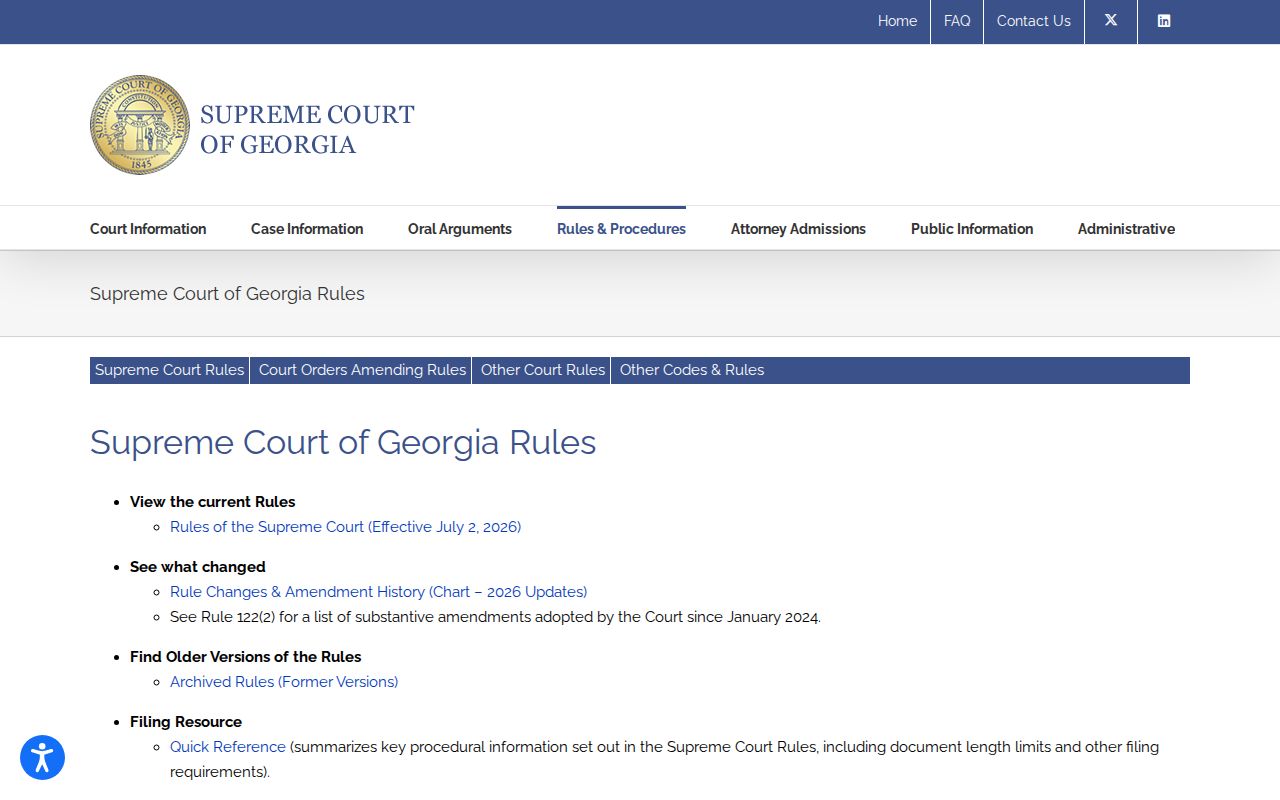
Ask court administration before bringing recording equipment into a Whitfield County proceeding; requesting a clerk copy is a different process.
Whitfield County Case Access and Restrictions
The Georgia Open Records Act presumes agency records open unless an exemption applies, while O.C.G.A. §15-6-61 defines the Superior Court clerk's record duties. Court access follows court rules, not a demand that staff create an explanation or a custom compilation. Juvenile files, sealed or restricted records, victim information, medical details, personal identifiers, and some active-investigation material may be withheld or redacted.
Under O.C.G.A. §35-3-37, record restriction limits dissemination of eligible GCIC arrest information and sealing addresses public access to eligible court material. Neither means every record was physically destroyed. If a case should be present but is not online, provide the clerk an exact name, case number if known, and filing range. Ask for the non-exempt portion and a copy or certification estimate.